

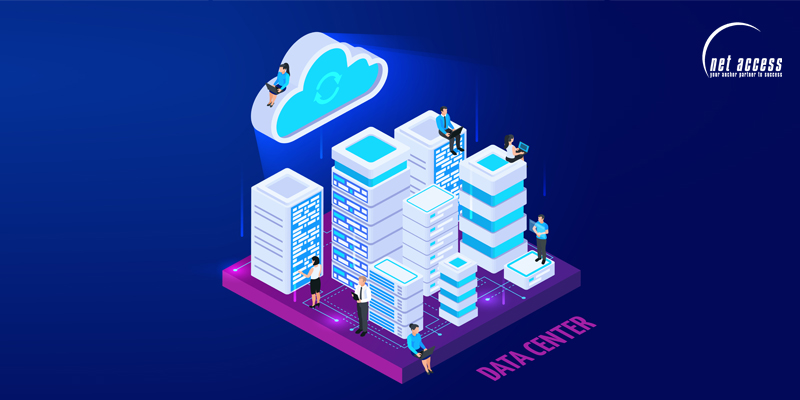
Why India’s Fastest-Growing Enterprises Trust Managed Data Center Services Providers
India’s digital economy is accelerating at an unprecedented pace. From rapidly scaling startups to established conglomerates operating across multiple verticals, enterprises across the country are racing to modernize their IT backbone — and the smartest ones are doing it by partnering with a top managed data center services provider like Net Access India Limited. But what makes this shift so decisive? Why are India’s fastest-growing businesses choosing to trust their most critical workloads to external data center services & solutions rather than building and managing infrastructure in-house?
This blog digs into the core reasons behind that trust — covering everything from uptime guarantees and compliance certifications to colocation flexibility and disaster recovery. If you’re evaluating your next IT infrastructure move, this is the guide you need.
The State of Enterprise IT in India: A Race Against Complexity
The Indian enterprise landscape has changed dramatically over the last decade. Digital transformation is no longer a boardroom buzzword — it is a survival imperative. Businesses are handling more data than ever before: customer records, financial transactions, supply chain logs, healthcare information, and real-time analytics streams. Managing this data efficiently and securely requires infrastructure that most companies simply cannot afford to build, maintain, and scale on their own.
This is where data center managed services and solutions step in. Instead of hiring large internal IT teams, purchasing expensive hardware, and navigating the complexities of power management, cooling systems, and physical security, enterprises are outsourcing their data center needs to specialized providers — and reaping significant operational and financial benefits in return.
According to industry analysts, the Indian data center market is among the fastest-growing in Asia-Pacific, driven by increased cloud adoption, government digitization programs, and the explosion of data-intensive applications. In this landscape, choosing the right data center service provider is not just a technical decision — it is a strategic one.
1. Guaranteed Uptime: The 99.99% Standard That Enterprises Demand
One of the most critical factors enterprises evaluate when selecting data center services is uptime. Downtime is not just an inconvenience — it translates directly into lost revenue, damaged customer trust, and regulatory penalties.
The best data center service providers offer Tier-III certified facilities that guarantee 99.99% availability. What does that mean in practical terms? It means your hosted applications experience less than 53 minutes of downtime per year. For businesses running e-commerce platforms, banking applications, healthcare portals, or logistics management systems, that level of reliability is non-negotiable.
Tier-III data centers achieve this level of uptime through redundant power feeds, multiple cooling units (HVAC systems), and dual-channel power connections that ensure zero single points of failure. Providers like Net Access India Limited have maintained a clean operational record with no reported failure instances since 2008 — a testament to how seriously top providers take infrastructure resilience.
Additionally, power reserve capacities of up to 140 KVA, along with power cycling tests conducted every six months, ensure that equipment compliance with dual power supply is maintained consistently. These are not just feature checklists — they are the operational backbone that India’s fastest-growing enterprises rely on.
2. Round-the-Clock Monitoring and Security: Never Sleeping, Always Watching
Cybersecurity threats don’t follow a 9-to-5 schedule. Neither equipment failures, power fluctuations, or temperature anomalies. This is why leading data center companies invest heavily in 24/7 monitoring and physical security infrastructure.
A reputed data center service provider in India deploys multiple layers of protection, including:
- 24/7 power monitoring at rack levels — ensuring precise visibility into power consumption and early detection of irregularities
- CCTV surveillance — continuous video monitoring of all facility entry and exit points
- Fire safety protocols — automated suppression systems and regular fire safety audits
- Room temperature detection — proactive temperature monitoring that triggers alerts before hardware is at risk
- Multi-layered physical access controls — biometric access, mantrap entry systems, and strict visitor management policies ensuring only authorized personnel enter the facility
For enterprises in regulated industries like BFSI (Banking, Financial Services & Insurance), healthcare, and insurance, this level of round-the-clock vigilance is not optional — it is mandated by law and industry standards.
3. Compliance Certifications That Open Enterprise Doors
When enterprises choose a managed data center services provider, compliance is often the deciding factor. Data residency laws, privacy regulations, and industry-specific mandates require businesses to store and process data in certified, auditable environments.
The leading data center infrastructure solutions and services providers in India carry internationally recognized certifications, including:
- HIPAA (Health Insurance Portability and Accountability Act) — mandatory for healthcare enterprises handling patient records
- SSAE 18 (Statement on Standards for Attestation Engagements No. 18) — the gold standard for auditing service organizations
- SOC 2 Type II — validating that a provider’s data security controls have been tested and verified over an extended period
These certifications signal that the provider has undergone rigorous third-party audits, maintained comprehensive security controls, and had demonstrable processes for risk management, access control, and incident response. For enterprises bidding on government contracts, working with international partners, or handling sensitive personal data, partnering with a certified data center provider is often a prerequisite — not a preference.
4. Flexible Data Center Types to Match Every Business Need
Not all enterprises have the same infrastructure requirements. A fast-scaling fintech startup has very different needs from an established manufacturing conglomerate. This is why the best data center service providers offer multiple deployment models:
Enterprise Data Centers
Hosted on the provider’s premises, these serve large organizations needing dedicated infrastructure tailored to their operational scale.
Colocation Data Center Service Providers in India
Colocation is a popular choice for enterprises that own their servers and networking equipment but want to house them in a professionally managed, secure, and power-redundant facility. Colocation data center service providers offer the physical space, cooling, power, bandwidth, and security — while the enterprise retains control over its own hardware and software stack. This is ideal for businesses looking to reduce capital expenditure without compromising control.
Managed Data Centers
In fully managed models, the provider takes end-to-end ownership of operations — hardware, monitoring, maintenance, security, and support — freeing the enterprise IT team to focus on higher-value activities like digital transformation initiatives.
Cloud Data Centers
For enterprises leveraging hybrid IT strategies, leading providers also offer seamless public cloud integration with data center infrastructure, enabling workloads to move fluidly between on-premises, colocation, and cloud environments.
This flexibility is a core reason why data center companies with diverse service portfolios attract clients across industry verticals.
5. Comprehensive Scope of Managed Services: End-to-End Ownership
When enterprises partner with a managed data center services provider, they expect more than just rack space. The scope of data center managed services and solutions offered by top-tier providers encompasses:
- Design and migration of existing on-premises infrastructure to the data center environment
- Public cloud integration with existing data center infrastructure for hybrid workloads
- Complete ownership and managed data center operations
- Close monitoring of all data center IT assets including servers, storage, and networking
- Backup and restoration services with defined Recovery Time Objectives (RTO) and Recovery Point Objectives (RPO)
- Database management ensuring optimal performance and availability of critical business databases
- Disaster Recovery (DR) management and design — including DR site setup, failover testing, and business continuity planning
- Storage management services — including SAN, NAS, and tiered storage solutions
- Bandwidth services with redundant connectivity options
- Network and server security services — including firewalling, intrusion detection, and patch management
This comprehensive scope allows enterprises to consolidate multiple IT vendors into a single, accountable partner — simplifying governance and reducing operational overhead significantly.
6. Strategic Locations: Low Latency, High Availability
Geographic positioning matters enormously in data center strategy. Data centers are located closer to end users, and enterprise offices deliver lower latency, better application performance, and faster data retrieval.
The best data center service providers operate from strategic locations. For example, facilities in Chennai and Hyderabad — two of India’s most important technology and business hubs — provide enterprises in South India with exceptionally low latency levels while also serving clients nationwide. These cities benefit from robust telecom infrastructure, multiple internet exchange points, and a stable power grid — all critical factors for data center operations.
Providers with presence across multiple cities — including Chennai, Bangalore, Pune, and Delhi — give enterprises the flexibility to set up primary and secondary data center sites in geographically diverse zones, strengthening their disaster recovery posture.
7. Disaster Recovery and Business Continuity: Built-In Resilience
India’s geographic diversity means enterprises must plan for a wide variety of disruptions — from cyclones and floods in coastal regions to power outages in inland areas. The top data center service providers invest in building resilience against both manmade and natural disasters.
Key disaster recovery features include:
- Independent geographic zones for primary and secondary data center sites, ensuring business continuity even if one location is affected
- Minimum racks dedicated to small-scale businesses that remain unaffected during natural disasters
- Redundant power and cooling that prevent localized failures from cascading into service outages
- Comprehensive DR design services including RPO/RTO planning, failover testing, and regular DR drills
For enterprises in regulated industries, documented DR capabilities are often required as part of compliance audits. Partnering with a provider that has a proven disaster recovery framework removes a significant compliance burden from internal IT teams.
8. Cost Efficiency and Scalable Investment Models
Building and operating a private data center demands enormous capital investment — in hardware, real estate, power infrastructure, cooling systems, security systems, and skilled operations staff. For most enterprises, this capital expenditure is difficult to justify, especially when business needs are unpredictable, and infrastructure requirements fluctuate.
Data center services & solutions from managed providers convert this capital expenditure into a predictable operational expense. Enterprises pay for what they use, scale up or down based on demand, and avoid the financial risk of over-provisioning infrastructure that sits idle.
This cost model is particularly attractive for fast-growing enterprises that need to scale quickly without lengthy infrastructure procurement cycles. A reliable managed data center services provider can provision additional rack space, bandwidth, and compute resources in a fraction of the time it would take to purchase and deploy equivalent on-premises hardware.
9. Trusted Partner Ecosystem and Technology Alliances
Leading data center infrastructure solutions and services providers don’t operate in isolation. They build deep partnerships with the world’s leading technology vendors — including Microsoft, IBM, Dell, HP, Cisco, AWS, Lenovo, and specialized security vendors like Fortinet, Sophos, and Trend Micro — to offer enterprises access to best-in-class technologies.
These partnerships mean enterprises benefit from:
- Pre-validated hardware configurations that have been tested for reliability and performance
- Access to the latest storage, compute, and networking innovations
- Multi-vendor support expertise that simplifies issue resolution
- Licensing and procurement advantages are passed on to clients
For enterprises navigating a complex technology landscape, having a data center service provider with strong OEM relationships is a significant advantage.
10. Dedicated Human Support: The Human Touch That Technology Can’t Replace
Even in an era of automation, the human element remains critical in enterprise IT support. The best managed data center services provider ensures that every client has a dedicated point of contact — a human expert who understands the client’s environment, priorities, and operational requirements.
This personal accountability translates into faster issue resolution, proactive communication during planned maintenance windows, and customized reporting that gives enterprises complete visibility into their data center operations. The assurance that there is always a knowledgeable person available at any hour — not just an automated ticketing system — is something India’s top enterprises consistently value.
Industries That Rely on Managed Data Center Services in India
The demand for data center managed services and solutions spans every major industry vertical in India:
- BFSI — Banks, NBFCs, and insurance companies rely on data centers for core banking systems, transaction processing, and regulatory reporting
- Healthcare — Hospitals and diagnostic chains depend on HIPAA-compliant data centers for electronic health records and medical imaging systems
- Manufacturing — ERP systems, supply chain platforms, and quality management applications require high availability and low latency
- Retail and E-Commerce — Peak season scalability and 24/7 transaction processing demand resilient, scalable data center infrastructure
- Agribusiness — Crop management software, IoT sensor data, and commodity trading platforms require reliable, secure hosting environments
Conclusion: Make the Smart Infrastructure Decision Today
India’s fastest-growing enterprises are not leaving their digital infrastructure to chance. They are choosing to partner with proven, certified, and experienced managed data center services providers — and the results speak for themselves: higher uptime, stronger security, regulatory compliance, and the agility to scale without limits.
Whether you need colocation data center service providers in India for your own hardware, a fully managed hosting environment, or a hybrid cloud-plus-data-center model, the right partner can transform your IT from a cost center into a competitive advantage.
Net Access India Limited, a proud entity of the Murugappa Group, has been delivering world-class data center services & solutions for over two decades across Chennai, Hyderabad, Bangalore, Pune, and Delhi. With Tier-III facilities certified under HIPAA, SSAE 18, and SOC 2 Type II, a 99.99% uptime guarantee, 24/7 expert monitoring, and a comprehensive portfolio of data center infrastructure solutions and services, Net Access is the partner India’s leading enterprises trust. Don’t let outdated infrastructure hold your growth back.
Talk to a Net Access data center expert today and discover how our data center managed services and solutions can give your business the speed, security, and scalability it deserves.